Author

Eva Nevečeřalová
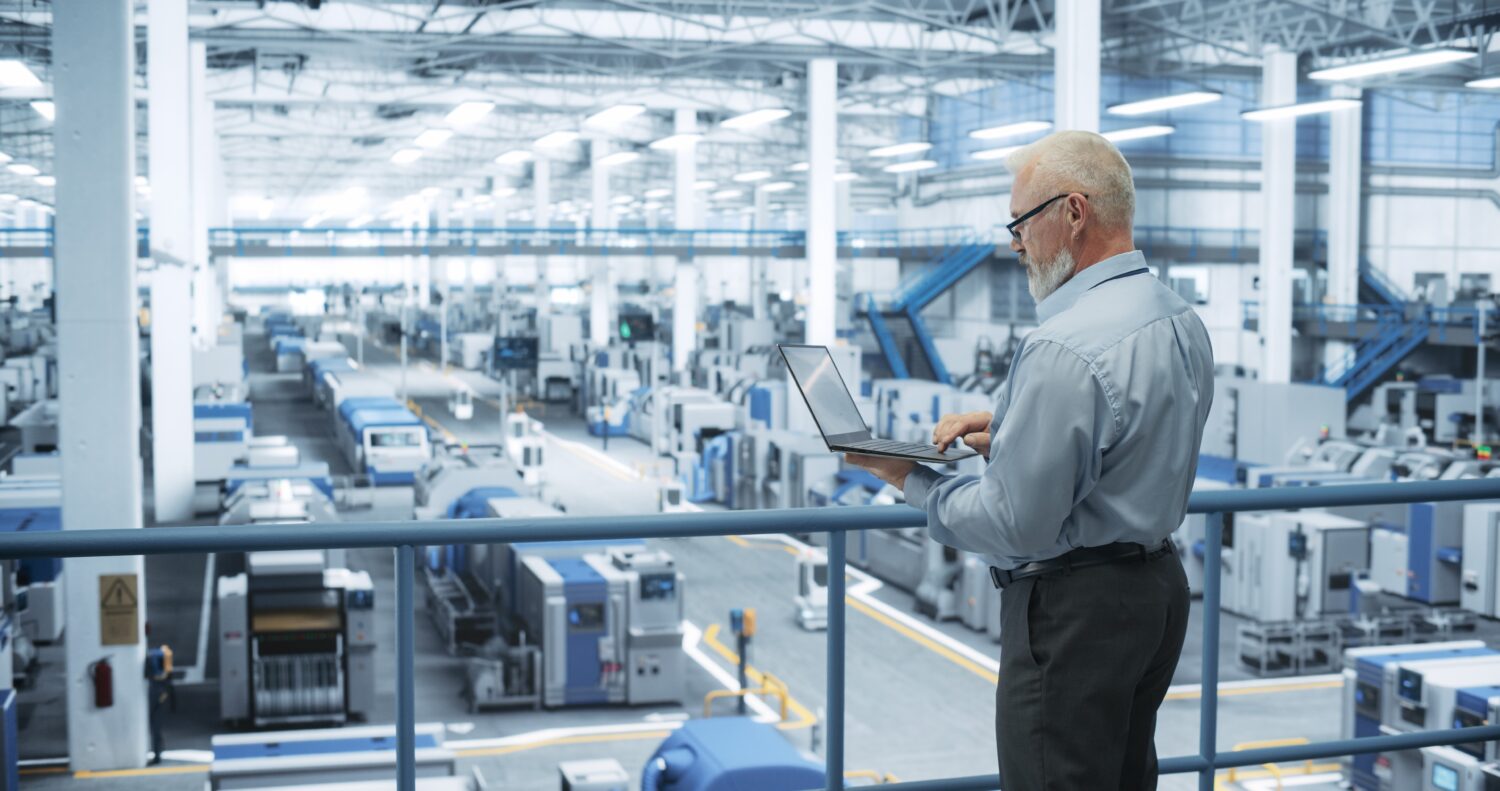
Manufacturing companies today face a wide range of pressures—from rising costs and a shortage of skilled workers to complex regulations. What are the most common challenges, and how can they be addressed using SAP?
We have prepared an overview of the 10 most common challenges faced by manufacturing companies, which we will gradually expand into detailed articles. In them, we will show how these challenges can be addressed using modern SAP ERP—especially SAP S/4HANA Cloud, with which our consultants have hands-on experience.
Whether it’s engineering firms, component manufacturers, or process industries, we encounter very similar situations. Production data is not available in real time, planning still takes place in spreadsheets, product changes are difficult to reflect in processes, and management often works with outdated reports.
The result is usually:
Modern cloud ERP systems, such as SAP S/4HANA Cloud, can address these issues systematically—by connecting production, logistics, finance, and management into a single digital environment.
Based on experience from completed projects and conversations with manufacturing managers, we have identified ten areas that companies deal with most frequently.
Companies often lack up-to-date online information about production progress, line performance, inventory levels, or deviations. Work-in-progress is sometimes tracked only on paper or in disconnected systems.
In the detailed article, we explain how SAP provides a comprehensive real-time overview of production.
read moreProduction planning is often carried out in daily or even weekly intervals. As a result, responses to changes in demand or material availability are slow.
Read more about planning in SAP, including the option of automated production planning.
read moreProduction, logistics, and finance often operate in separate systems. This leads to cost inconsistencies, delays, and planning errors.
Read more about the benefits of integrated ERP connecting all company processes.
read moreMany key pieces of information are still managed in spreadsheets or local applications. However, these are not interconnected and increase the risk of errors.
In this article, we summarize the challenges faced by companies operating in such a risky setup and describe the benefits of transitioning from fragmented tools to a unified system such as SAP Cloud ERP.
read moreManufacturing companies must continuously look for new ways to increase productivity and reduce costs.
What does SAP Cloud ERP offer in the area of cost optimization and production performance management?
read moreChanges to products, variants, or customer-specific configurations can create chaos in both planning and production.
We will show how SAP supports product change management and variant configuration.
Manufacturing companies often struggle with a lack of experienced employees and specialists.
Digital tools can significantly help by automating and streamlining processes.
Managers need fast, reliable data for decision-making. However, reports are often prepared manually and with significant delays.
We will demonstrate the possibilities of real-time analytics in SAP.
Increasing regulatory demands place high pressure on data transparency and accuracy.
We will explain how ERP helps ensure auditability and compliance.
Many manufacturing companies still operate legacy systems that are expensive to maintain and difficult to scale.
We will show the benefits of transitioning to a modern cloud ERP solution.
One of the most common issues we encounter is the lack of up-to-date production data.
In many companies:
SAP S/4HANA Cloud addresses this problem, for example, through:
As a result, companies can respond quickly to breakdowns, material shortages, or changes in production.
At MIBCON, we have a dedicated team of in-house consultants focused on manufacturing companies. Thanks to our experience from projects across various industries, we can quickly identify process weaknesses and design solutions on the SAP S/4HANA Cloud platform.
Our goal is not just to implement a system, but to help companies comprehensively optimize production, gain better data visibility, and prepare their IT for future growth.
Contact us to schedule a no-obligation consultation with our manufacturing experts. Together, we will review your processes and show you concrete opportunities for digitalizing your production with SAP.
Eva Nevečeřalová
Let us know what we can help you with and when it would be convenient to discuss the topic. We'll be happy to get back to you.