Author

Vladimír Vaněček

On Thursday, April 16, 2026, we welcomed representatives from manufacturing companies to Prague’s Metronom Business Center for the next edition in our series From Chaos to Clarity: SAP Solutions for Modern Manufacturing.
The From Chaos to Clarity series gives manufacturing executives the opportunity to openly discuss today’s operational challenges and explore concrete ways to resolve them through modern technology, process standardization, and well-managed change.
We designed the April session not merely as a discussion about technology, but primarily about transforming workplace practices and executive decision-making so that digitalization delivers real, measurable results.
On Thursday, April 16, 2026, we welcomed manufacturing leaders to Prague’s Metronom Business Center for another session in our series From Chaos to Clarity: SAP Solutions for Modern Manufacturing. The goal was to openly address current operational challenges and showcase practical pathways to tackle them using modern technology, standardized processes, and effective change management.
The event was tailored primarily for manufacturing executives facing growing pressure on productivity, agility, and operational transparency. These factors directly dictate market competitiveness today—and they cannot be managed sustainably without reliable data and stable processes.
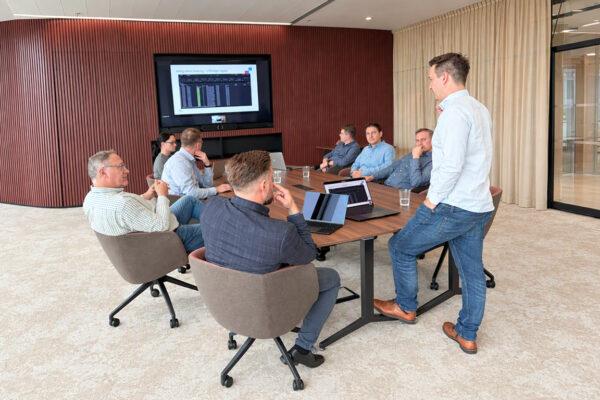
The atmosphere throughout the afternoon was open, collaborative, and practical. Discussions went far beyond software, focusing instead on how to rethink business operations so that digitalization truly drives value.
The opening keynote was delivered by Gerhard Knop, who highlighted the core takeaway of the entire event: technology alone does not drive change. Real transformation stems from how organizations think about their processes, their people, and their decision-making.
As emphasized right from the start, digitalization is not an IT project; it is a fundamental shift in organizational culture and trust. Companies rarely fail due to a lack of tools or data, but rather because of legacy mindsets and resistance to change.
Considerable emphasis was placed on the role of executive leadership. Management sets both the pace and direction of transformation, fostering an environment where innovation can thrive. Without active leadership support and a clear vision, digitalization risks becoming just another initiative with no tangible impact.
Building on the opening remarks, the next presentation explored the role of a modern ERP system in managing manufacturing enterprises. A recurring theme was that operational chaos rarely stems from an absence of information, but rather from fragmented data and a lack of clear standards.
Speed is one of the most critical assets of modern organizations—provided it does not come at the expense of quality. The solution lies in process standardization and proven best practices that allow companies to respond quickly while maintaining operational stability.
A modern cloud ERP is much more than an IT application. It is a unified platform connecting processes across the entire organization to create a single source of truth—from manufacturing and logistics to finance.
This principle resonated throughout the event: clarity does not come from the sheer volume of data, but from structuring it effectively.
A highly practical part of the agenda addressed implementation projects, offering an honest perspective on why project success depends on far more than just software features or vendor capabilities.
The data presented during the session was telling: only about a quarter of implementation projects run completely smoothly. The primary risk is rarely technical; it is an organization’s lack of readiness for change.
Implementation experience highlights several recurring pitfalls:
Choosing the right implementation partner and securing deep client engagement are just as important as the platform itself. The customer is not a passive spectator in an ERP implementation, but its co-creator.
The next segment showcased real-world operational scenarios. Attendees saw firsthand how modern systems respond dynamically to typical manufacturing disruptions—such as shifting capacities, material shortages, or sudden production rescheduling.
The live demonstrations illustrated how modern tools can:
Data and its accurate interpretation play a decisive role here. As noted in the closing remarks of the expert session, data is now one of the most critical raw materials in manufacturing—and how effectively it is utilized will determine future competitiveness.
While the afternoon covered systems, processes, and artificial intelligence, the overarching message of the day was change:
Technology is merely an enabler. The real breakthrough happens only when an organization is fully prepared to use it.
The event reaffirmed that manufacturing companies face very similar challenges—from shortages of skilled labor and pressure on efficiency to the demand for rapid market responsiveness. Open dialogue and peer-to-peer knowledge sharing remain essential to finding workable solutions.
We deeply appreciate the active engagement of all our guests and the insightful questions raised during both the formal sessions and informal networking. These conversations are often just as valuable as the presentations themselves.
We are proud to serve as a partner helping companies navigate the path from chaos to clarity—step by step, with an emphasis on resilient processes, high-quality data, and meaningful transformation.
We look forward to seeing you at our next event!
When and where? Check out our upcoming dates in the Events section.
Go to Events Vladimír Vaněček
Let us know what we can help you with and when it would be convenient to discuss the topic. We'll be happy to get back to you.